


Air freight forwarder: definition, role and difference with an air charter broker

In 2024, air cargo continues to play a strategic role in global trade, with an estimated growth of over 6% according to IATA. Behind this expansion—driven by e-commerce, partial industrial reshoring, and increasing demand for speed—one key player remains essential: the international air freight forwarder.
Despite generating over 60,000 monthly search impressions, the topic is still rarely explained in a clear, decision-oriented way.
At the intersection of logistics, regulation, and transportation, the air freight forwarder acts as a critical facilitator of international trade. However, as logistics needs become more complex—especially for urgent or sensitive cargo—its limitations become more apparent.
This is where another often-confused role comes into play: the air charter broker.
This guide explains both approaches, their differences, and when to use each.
What is an air freight forwarder?
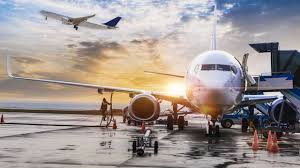
Definition and role of a freight forwarder
An air freight forwarder is a logistics provider responsible for organizing the transportation of goods by air on behalf of a client (exporter or importer).
Unlike an airline, the forwarder does not physically transport cargo. Instead, it designs and manages the most efficient logistics solution using scheduled commercial flights.
Key responsibilities include:
- planning international shipments
- selecting routes and airlines
- negotiating freight rates
- booking cargo space
- managing documentation
- coordinating all stakeholders
This makes the forwarder a central logistics orchestrator in global trade operations.
The forwarder in the international supply chain
In international logistics, the forwarder connects multiple actors:
- the shipper (exporter)
- the consignee (importer)
- airlines
- customs authorities
Their role extends beyond booking cargo space. They optimize flows, anticipate constraints, and ensure smooth execution.
For example, in a Europe–Asia shipment, a forwarder may coordinate:
- trucking to the airport
- air freight transport
- export customs clearance
- international transit
- import clearance
- final delivery
👉 To understand this broader ecosystem, see our guide on
air freight
IATA certification and required approvals
Air freight forwarding operates within a strict regulatory framework.
The IATA accreditation allows forwarders to:
- issue Air Waybills (AWB)
- access global booking systems
- work directly with airlines
Additional certifications may be required, especially for dangerous goods (IATA DGR).
These standards ensure compliance and operational reliability in a highly regulated industry.
Freight forwarder vs air charter broker: what’s the difference?
The distinction between a freight forwarder and an
👉 air charter broker
is often misunderstood. Yet, their roles are fundamentally different.
The freight forwarder: using scheduled capacity
Forwarders operate by using existing airline capacity on scheduled flights.
Advantages include:
- cost efficiency
- wide network coverage
- suitable for regular cargo flows
However, this model comes with limitations:
- fixed schedules
- limited flexibility
- dependence on airline capacity
The air charter broker: dedicated aircraft solutions
An air charter broker provides fully customized transport solutions by chartering an entire aircraft.
This is known as
👉 air cargo charter
It allows companies to bypass all constraints of scheduled air freight.
Typical use cases include:
- urgent shipments
- oversized cargo
- remote destinations
- sensitive or high-value goods
The broker selects the aircraft, negotiates with operators, and manages the entire operation.
Comparison table: when to use each solution
| Criteria | Freight forwarder | Air charter broker |
|---|---|---|
| Transport mode | Scheduled flights | Dedicated aircraft |
| Flexibility | Limited | Very high |
| Lead time | Airline dependent | Fully controlled |
| Capacity | Fixed | Adjustable |
| Cargo type | Standard | All types |
| Urgency | Limited | Ideal |
| Cost | Optimized | Tailored |
| Confidentiality | Limited | High |
What does an air freight forwarder actually do?
Quotation and booking
Every shipment starts with a detailed quotation based on:
- volumetric weight
- dimensions
- cargo type
- destination
- required delivery time
The forwarder then books space with an airline.
Documentation management (AWB, export, EUR.1)
Air transport requires precise documentation, including:
- Air Waybill (AWB)
- export declaration
- certificates of origin
- specific compliance documents
This administrative expertise is critical to avoid delays.
Cargo consolidation
Forwarders combine multiple shipments into a single load to:
- reduce costs
- maximize aircraft capacity
- offer competitive pricing
This process, called consolidation, is central to freight forwarding economics.
Customs clearance
Forwarders often act as customs agents, handling:
- tariff classification
- duties and taxes
- regulatory compliance
This ensures smooth international trade flows.
Limitations of traditional freight forwarders
No dedicated aircraft for urgent shipments
Forwarders rely on scheduled flights. In urgent situations, they cannot guarantee immediate departure.
Dependence on airlines
Operational disruptions such as:
- delays
- cancellations
- capacity shortages
directly impact shipments.
Not suitable for oversized or sensitive cargo
Certain shipments require specialized solutions, including:
- heavy industrial equipment
- oversized cargo
- complex dangerous goods
In these cases, scheduled air freight is insufficient.
When should you switch to air charter?
Urgent, oversized, or sensitive cargo
Air charter becomes essential when:
- delivery deadlines are critical
- cargo requires special handling
- security is a priority
Remote or underserved destinations
Some locations are not efficiently served by commercial airlines. Chartering allows direct access.
Need for confidentiality and control
Dedicated aircraft ensure full control over timing, routing, and cargo handling.
In these scenarios,
👉 air cargo charter solutions
are the most effective option.
Avico: from freight forwarding to dedicated charter
As logistics challenges evolve, companies increasingly need partners who can go beyond traditional freight forwarding.
Avico offers a hybrid approach:
- air freight organization
- dedicated charter solutions
This allows businesses to adapt from standard logistics to critical operations seamlessly.
Avico supports clients with:
- needs analysis
- solution design
- full operational management
👉 Discover our
air freight solutions
👉 Or directly
request a cargo quote
FAQ – Air freight forwarder
Can a freight forwarder organize a dedicated cargo flight?
Rarely. Most forwarders rely on scheduled flights. Dedicated charters require a broker.
What is the difference between AWB and LTA?
They are the same document. AWB is the international term, LTA is the French equivalent.
Can a forwarder handle dangerous goods?
Yes, if certified under IATA DGR regulations.
How to choose between a forwarder and charter?
Forwarders are ideal for standard shipments. Charter is necessary for urgent or complex cargo.
Is Avico IATA certified?
Yes, Avico is IATA accredited and operates with industry-standard systems.
Conclusion
The international air freight forwarder remains a key player in global logistics, enabling efficient and cost-optimized cargo flows.
However, as supply chains demand more speed, flexibility, and customization, its limitations become evident.
Air charter solutions provide a powerful complement—offering control, speed, and adaptability when standard logistics is no longer sufficient.
Understanding the difference between these two approaches allows companies to make smarter logistics decisions.
👉 Need a tailored solution for your shipment?
Request a cargo quote
votre lecture
Air charter for a sports team makes it possible to organise a flight according to the specific needs of a club, federation or delegation. Unlike a ...
Organising air travel for a sports team requires careful preparation. Players, coaches, medical staff, managers and accompanying personnel must be ...
A driving experience on a racing circuit is designed to make time count: a few hours behind the wheel, a demanding track, and a schedule that ...