


Oil and gas air charter: cargo, crew rotations and offshore emergency aviation 2
In the oil and gas industry, operational time carries direct economic value. An offshore platform shutdown, a turbine awaiting a critical component or a delayed crew rotation can generate losses reaching millions of dollars per day. In this environment, where production continuity is non negotiable, oil and gas air charter services have become a strategic logistics pillar.
Unlike conventional aviation transport, energy sector operations operate under extreme constraints. Remote production sites, limited infrastructure, strict safety standards and uncompromising timelines make scheduled passenger or cargo services insufficient in many situations.
Specialised air charter solutions enable the simultaneous transport of personnel, industrial equipment and urgent cargo to some of the world’s most complex operational environments, from the North Sea to West African offshore fields, across the Middle East and into Latin America.
This article explores the real operational uses of aviation charter within the oil and gas industry, the aircraft deployed and the regulatory challenges specific to this global sector.
Why the oil and gas industry relies on air charter
Offshore platforms and remote locations without scheduled connectivity
Oil and gas production frequently takes place far from established logistics hubs. Offshore platforms, desert installations and upstream sites often lack access to commercial aviation routes.
In these environments, offshore aviation charter becomes the only reliable solution to maintain supply chain continuity. Energy companies are not simply seeking transportation but fully adaptable air capacity aligned with industrial constraints and operational schedules.
Offshore crew rotation cycles
Energy production depends on precisely scheduled workforce rotations. Common offshore cycles include 28 days on and 28 days off rotations, intensive 14 day rotations and customised schedules depending on project requirements.
Any delay directly affects operational safety and compliance with regulated rest periods. Oil and gas air charter allows operators to synchronise personnel movements with offshore operational windows, ensuring seamless workforce transitions.
Zero tolerance for delays in production environments
Logistics within the energy sector operates under fundamentally different priorities compared with commercial aviation.
A delay may lead to temporary production shutdowns, immobilised technical teams, contractual penalties and increased safety risks. Aviation charter for oil and gas therefore functions primarily as industrial risk mitigation rather than simple passenger transport.
Main use cases of oil and gas air charter
Offshore crew rotation flights
Personnel transport represents the most frequent charter mission in the offshore sector. These operations require strict punctuality, coordination with offshore helicopter transfers and management of specialised technical baggage.
Regional aircraft typically transport crews from international hubs to coastal bases before helicopter transfer to offshore installations.
Industrial equipment cargo transport
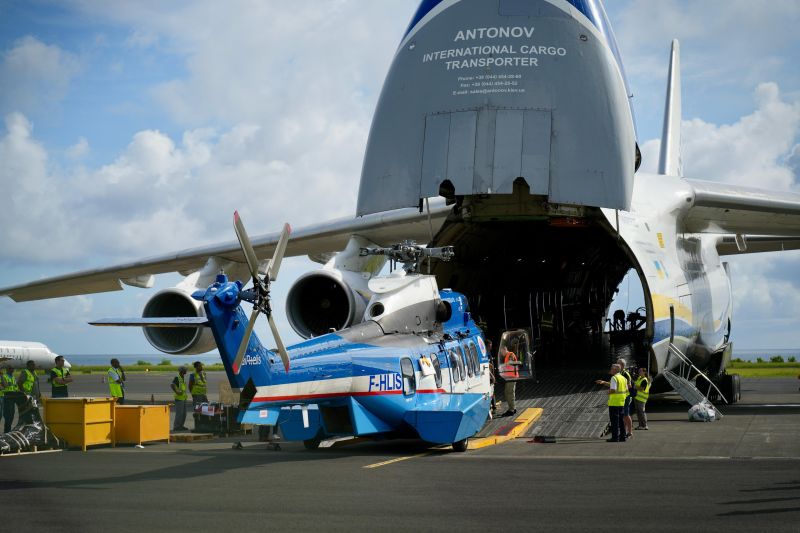
The oil and gas sector relies heavily on specialised heavy components. Oil and gas cargo charter enables urgent transport of turbines, compressors, drilling equipment, valves and mechanical modules that cannot wait for conventional freight schedules.
These missions complement operations involving heavy industrial equipment cargo where timing directly impacts production continuity.
Medical evacuation and offshore emergencies
Offshore operations require rapid emergency response capability. Dedicated medical aircraft can be mobilised for serious injuries on platforms, offshore medical emergencies or international hospital transfers.
In urgent cases, aircraft activation may occur within a few hours, ensuring immediate access to advanced medical facilities.
AOG support and critical spare parts
Energy companies frequently operate their own offshore helicopter fleets. When an aircraft becomes grounded, rapid spare part delivery becomes essential.
Air charter enables immediate transport of aviation components, reduces aircraft downtime and maintains offshore rotation schedules.
Project cargo to remote upstream sites
Large scale energy projects involve complex logistics chains into isolated regions. Cargo charter flights allow direct delivery to secondary airports, reduce handling transfers and secure project timelines.
These missions often complement broader air freight solutions used throughout energy supply chains.
Which aircraft are used for oil and gas operations
Aircraft selection depends primarily on runway conditions, payload requirements and flight distance.
Light twin aircraft for short routes and remote airstrips
Aircraft such as the King Air 200 and Pilatus PC 12 provide flexible access to remote infrastructure and short runways. They are commonly used for inspections and small technical team transport.
| Aircraft | Capacity | Primary Use |
| King Air 200 | 6 to 9 passengers | Technical inspections |
| Pilatus PC 12 | 8 passengers | Remote site access |
Regional turboprops for crew rotations
ATR 72 and Dash 8 Q400 aircraft represent industry standards for offshore crew transport due to fuel efficiency and strong short runway performance.
| Aircraft | Capacity | Key Advantage |
| ATR 72 | 70 passengers | Fuel efficiency |
| Dash 8 Q400 | 78 passengers | Short runway performance |
Narrowbody aircraft for large personnel movements
Boeing 737 and Airbus A320 aircraft are widely used to transport multiple crews simultaneously between international hubs and operational bases. This approach reduces cost per seat and simplifies rotation planning.
Heavy cargo aircraft for oversized equipment
Certain industrial components exceed the limits of standard cargo aircraft.
| Aircraft | Payload | Typical Mission |
| Antonov AN 124 | 120 tons | Industrial modules |
| Boeing 747F | 100 tons | Long haul urgent cargo |
These aircraft transport oversized equipment that cannot be moved by conventional logistics methods.
Avico’s global coverage for the oil and gas sector
The effectiveness of charter operations depends heavily on regional expertise and operational presence within energy producing regions.
North Sea operations from Aberdeen
Aberdeen remains one of the world’s leading offshore aviation hubs linking the United Kingdom and Norway. Operations include scheduled crew rotations, offshore maintenance support and urgent platform logistics flights.
West Africa energy corridor
Nigeria, Angola, Côte d’Ivoire and Gabon represent strategic oil and gas aviation markets. Local regulatory complexity requires deep operational expertise. Avico’s presence in Abidjan facilitates coordination across the region and supports rapid mission deployment.
Middle East energy hubs
From Dubai, operations cover the United Arab Emirates, Saudi Arabia, Qatar and Oman. Missions primarily involve industrial cargo transport and large scale personnel rotations supporting ongoing energy projects.
Latin America offshore markets
Brazil and Trinidad and Tobago rank among the most active offshore regions globally. Charter missions frequently combine crew transport and technical cargo within a single operational program.
Dangerous goods in oil and gas air cargo operations
Air transport supporting the energy industry regularly involves hazardous materials governed by strict aviation regulations.
Flammable hydrocarbons and gases
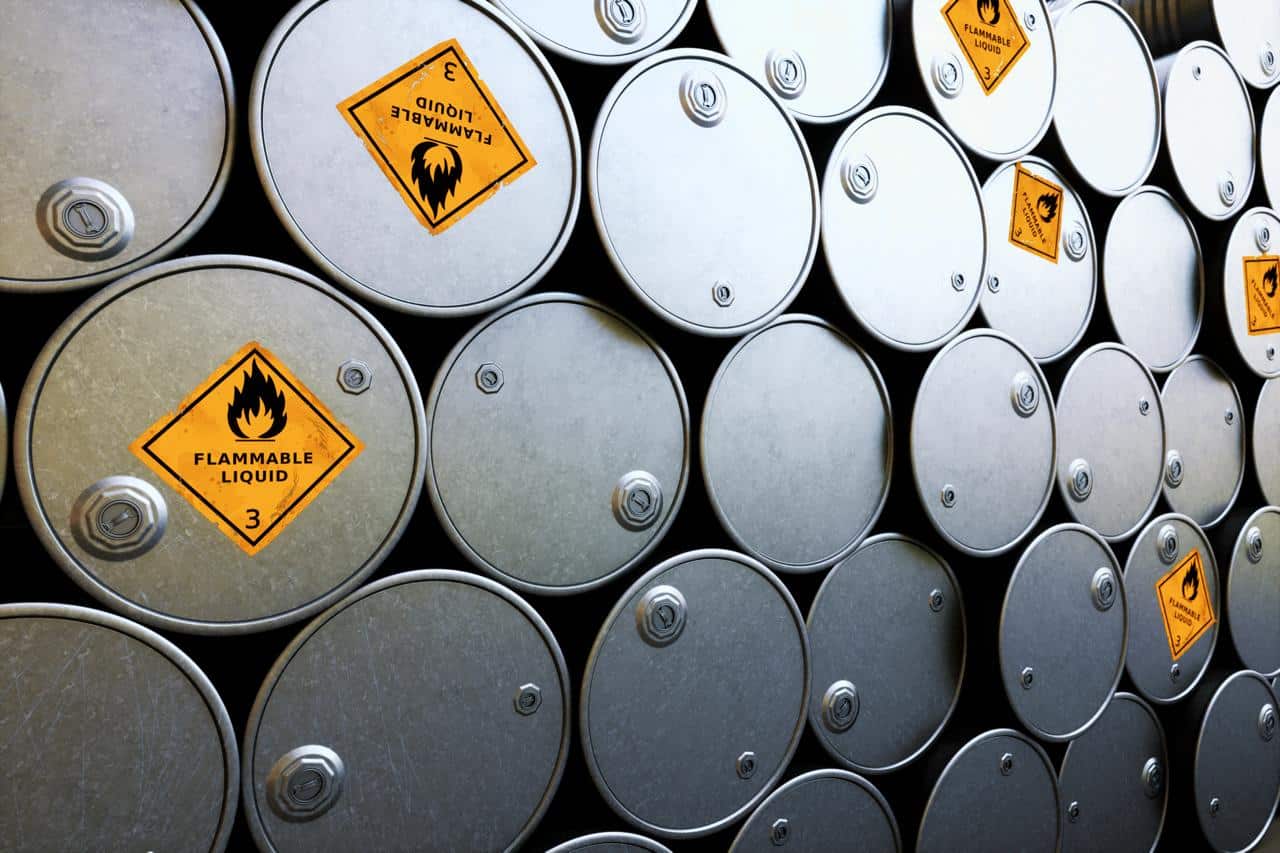
Common shipments include flammable liquids classified under Class 3, compressed gases under Class 2 and equipment containing hydrocarbon residues. Each shipment requires prior airline approval before transport.
Packaging, documentation and regulatory compliance
Compliance relies on certified UN packaging, complete IATA Dangerous Goods Regulations documentation, accurate declarations and carrier approval procedures. Incorrect classification may result in immediate shipment rejection.
How to organise an oil and gas charter with Avico
Successful operations depend on rapid coordination between logistics and aviation specialists. The process generally includes operational needs analysis, aircraft selection, regulatory validation, handling and customs coordination and continuous operational monitoring.
Avico cargo charter solutions allow rapid activation even in complex environments. For urgent or planned missions, operators can get a quote directly from specialised teams.
FAQ – Oil and gas air charter
How quickly can an offshore emergency charter be organised?
Between two and four hours for medical evacuation or urgent crew transport. Industrial cargo charters are typically organised within 24 to 48 hours depending on aircraft availability.
Can Avico handle dangerous goods typical of oil and gas operations?
Yes. Teams manage shipments including Class 3 flammable liquids and Class 2 gases in compliance with IATA Dangerous Goods Regulations using certified handling partners.
Does Avico operate in West Africa?
Yes. Avico maintains operational presence in the region with extensive experience across sub Saharan Africa, particularly from Abidjan.
What is the cost of a North Sea crew rotation charter?
Typical costs range between €15,000 and €45,000 per rotation depending on aircraft size and distance. Precise pricing depends on operational requirements.
Can Avico manage recurring weekly rotation programs?
Yes. Long term charter agreements allow fixed pricing structures and dedicated operational management for recurring missions.
Conclusion
Within the oil and gas industry, aviation logistics is not an auxiliary service but a critical component of the production chain. Oil and gas air charter solutions ensure operational continuity in environments where every hour directly impacts output and safety.
Whether supporting offshore crew rotations, transporting industrial equipment or responding to medical emergencies, specialised air charter provides the flexibility and responsiveness required by modern energy operations.
With global coverage including Aberdeen, Dubai and Abidjan, combined with decades of operational expertise, Avico supports oil and gas stakeholders in securing reliable aviation solutions worldwide.
Companies planning upcoming missions or responding to operational emergencies can request a quote for their oil and gas operation directly through Avico’s specialised teams.
votre lecture
Air charter for a sports team makes it possible to organise a flight according to the specific needs of a club, federation or delegation. Unlike a ...
Organising air travel for a sports team requires careful preparation. Players, coaches, medical staff, managers and accompanying personnel must be ...
A driving experience on a racing circuit is designed to make time count: a few hours behind the wheel, a demanding track, and a schedule that ...