


Private helicopter charter price: costs, aircraft types and use cases

Search demand for private helicopter charter has grown steadily across Europe and international luxury travel markets. Data trends show strong interest around pricing related queries such as private helicopter price, rent a helicopter and helicopter charter France, alongside increasing Spanish traffic driven by searches including alquiler helicoptero privado.
This evolution reflects a broader transformation in premium mobility. Helicopters are no longer reserved for exceptional occasions or ultra niche clients. They are increasingly used as practical transport solutions for executives, event organisers and high net worth travellers seeking flexibility, speed and direct access to destinations unreachable by conventional aviation.
Yet one question dominates nearly every initial enquiry: how much does it cost to charter a private helicopter and what determines the price?
Understanding helicopter charter pricing requires looking beyond a simple hourly rate. Each mission is built around operational realities, aircraft capabilities and logistical constraints that shape the final quotation.
How much does a private helicopter charter cost
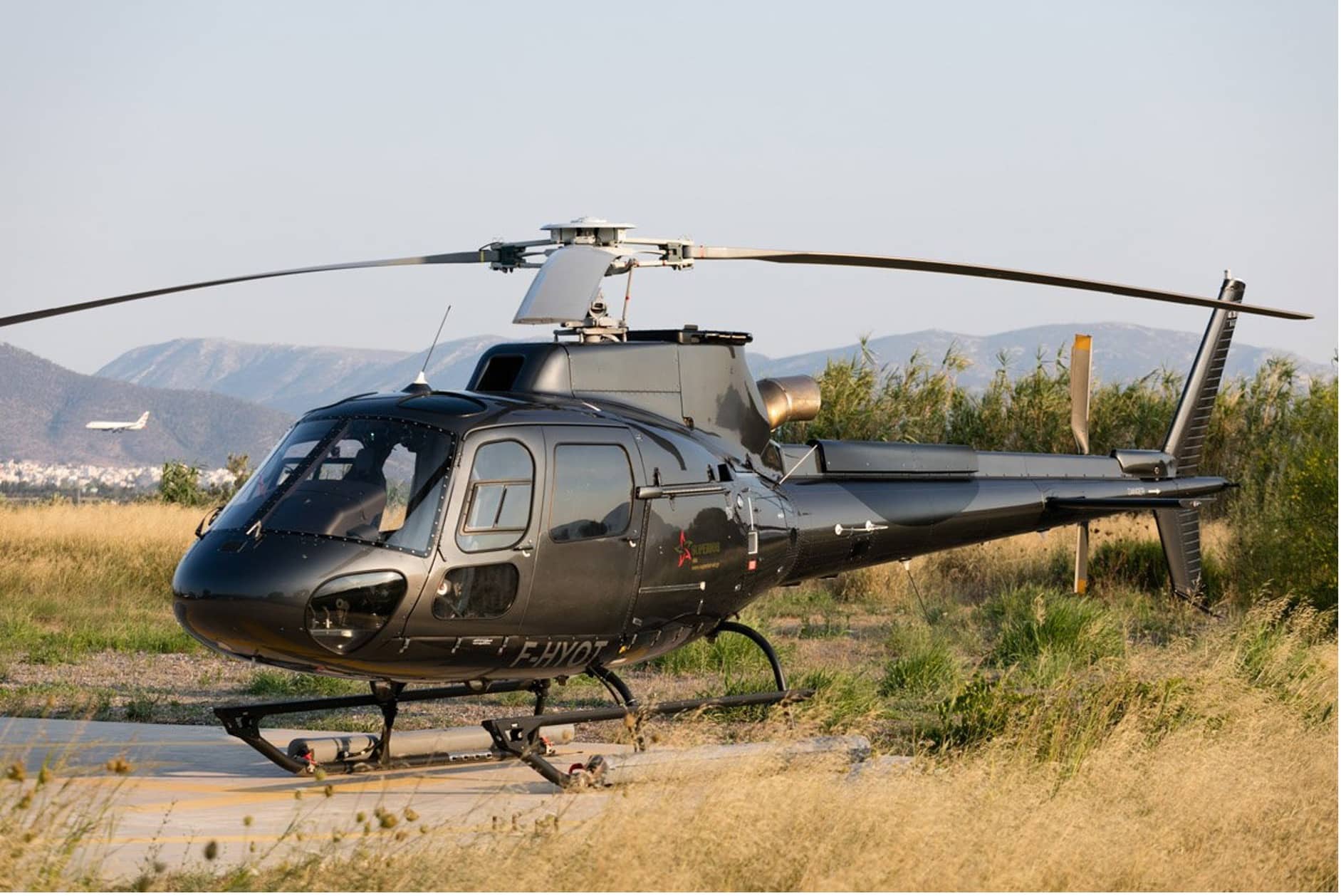
Unlike scheduled airline tickets, helicopter charter pricing does not follow a fixed public fare structure. Every flight is customised according to mission requirements, location and aircraft availability.
A helicopter should therefore be viewed less as a transport expense and more as a time optimisation tool. A journey that may require several hours by road can often be completed in minutes, eliminating congestion and complex transfers.
Factors influencing helicopter charter price
The primary pricing element is actual flight time, calculated in rotor running hours. Even short transfers may involve a minimum billing period covering aircraft preparation and crew mobilisation.
Distance also plays an indirect role. When the aircraft is not based at the departure point, a positioning flight is required. This explains why identical routes can vary in price depending on regional aircraft availability.
Aircraft category remains the most decisive factor. A light helicopter transporting three passengers has significantly lower operational costs than a twin engine aircraft certified for offshore or medical missions.
Additional operational elements may include landing fees, seasonal demand, local permits and specialised operations such as night flights or aerial filming.
Indicative helicopter charter price table
| Helicopter category | Capacity | Typical mission | Indicative priceper hour |
| Light helicopter (Robinson R44, Cabri G2) | 2 to 4 passengers | Short transfers, scenicflights | €800 to €1,200 |
| Intermediate helicopter (Bell 407, EC130) | 5 to 7 passengers | VIP and corporatetransport | €1,400 to €2,000 |
| Twin engine premium (H145) | 6 to 8 passengers | Business and medicalflights | €2,000 to €2,500 |
| Heavy helicopter (Super Puma) | 10 to 19 passengers | Group transport and technical missions | €3,500 to €6,500 |
These figures remain indicative and vary depending on geography, flight duration and operational complexity.
Hourly charter versus daily booking versus annual contracts
Hourly charter remains the most common solution for airport transfers and private events. Clients pay only for flight time and necessary positioning.
Companies frequently choose daily availability when several consecutive trips are planned. This model reduces repositioning costs while ensuring continuous aircraft access.
For recurring mobility needs, annual helicopter charter agreements provide predictable budgeting and operational priority. Luxury hospitality groups, financial institutions and energy companies increasingly adopt this structure.
Types of helicopters available for charter
Aircraft selection directly impacts passenger experience, flight range and total charter cost. Operators match helicopter capabilities with passenger numbers, landing constraints and mission objectives.
Light helicopters (2 to 4 seats): Robinson R44 and Cabri G2
Light helicopters represent the entry level segment of private helicopter charter. Compact and fuel efficient, they are ideal for short regional flights and aerial experiences.
They are widely used for panoramic flights, aerial photography and rapid local transfers. Their limited range typically restricts missions to flights under one hour.
Intermediate helicopters (5 to 8 seats): Bell 407 and EC130
This category forms the backbone of today’s helicopter charter market. It combines cabin comfort, performance and operational flexibility.
The Bell 407 and EC130 are particularly popular for VIP transfers thanks to panoramic cabins and reduced interior noise levels. They allow fast connections between major cities, resorts and coastal destinations while maintaining premium passenger comfort.
Heavy helicopters (8 to 19 seats): H145 and Super Puma
Heavy helicopters address complex missions requiring higher capacity and enhanced safety redundancy. Twin engine aircraft are preferred for offshore transport and medical operations due to certification standards.
The Super Puma, for example, can transport large passenger groups or technical teams to remote industrial locations, demonstrating the helicopter’s role beyond luxury travel into strategic logistics.
Why do clients rent a helicopter
Helicopter charter today serves a wide range of operational and lifestyle needs where speed and flexibility are essential.
VIP airport, hotel and yacht transfers
VIP transfer remains the most visible helicopter charter use case. In southern France, a Nice to Monaco flight takes less than ten minutes compared with over an hour by road during peak season.
This efficiency explains the growing adoption of helicopter charter among international travellers seeking seamless mobility between airports, hotels and yachts.
Aerial filming and event coverage
Film production companies and broadcasters frequently rely on helicopters for aerial footage that cannot be achieved through drones alone. Flight stability and adaptable altitude provide unmatched cinematic perspectives.
Major sporting and cultural events also depend on helicopter filming for live broadcasting.
Corporate mobility and business travel
For executives, helicopters function as productivity tools rather than luxury experiences. Multiple meetings across different cities can be completed within a single day without reliance on airline schedules.
A detailed comparison between aircraft solutions is explored in the internal guide discussing helicopter or airplane transport strategies depending on travel distance.
Medical evacuation and air ambulance missions
Speed becomes critical in medical emergencies. Helicopter medical evacuation allows rapid transport of patients and medical teams to specialised hospitals.
Aircraft are configured with certified medical equipment and specialised personnel to ensure continuous care during flight.
Aerial work and technical operations
Helicopters also support infrastructure inspection, power line monitoring and heavy lifting operations. These missions require precise coordination between aviation crews, engineers and regulatory authorities.
In complex international projects, operators may even organise missions designed to transport a helicopter itself to remote operational zones.
Helicopter charter in France: main operating regions
France benefits from a dense network of heliports and authorised landing zones, enabling high operational flexibility.
Paris and Île de France
The Paris region concentrates strong demand driven by corporate travel and international events. Frequent routes connect business districts with major airports, Normandy and the Loire Valley.
Helicopters significantly reduce transfer time between congested urban areas and regional destinations.
French Riviera and Monaco
The French Riviera represents one of Europe’s most active helicopter charter markets. During summer months, rotations between Nice, Cannes, Saint Tropez and Monaco operate continuously.
Permanent aircraft positioning often allows near immediate departure availability.
Alps and ski resorts
Winter demand shifts toward Alpine destinations. Helicopters provide rapid transfers between international airports and ski resorts, avoiding heavy seasonal traffic.
This accessibility has become a defining feature of premium mountain travel.
International helicopter charter with Avico
Helicopter charter increasingly operates within a global framework where clients expect seamless coordination across multiple jurisdictions.
Mediterranean and Middle East destinations
Morocco, Spain, Portugal and the United Arab Emirates experience growing demand linked to luxury tourism and international business travel. Spain in particular represents a strategic market supported by strong search growth around alquiler helicopteroprivado.
International coordination ensures regulatory compliance and consistent safety standards across borders.
Africa operations and Westair partnerships
In Southern Africa, helicopter operations support tourism, logistics and industrial missions. Partnerships including Westair Helicopters in Zambia and Zimbabwe enable operations in remote environments while maintaining international safety benchmarks.
These missions illustrate the helicopter’s versatility beyond luxury transport into infrastructure and regional connectivity.
How to book a helicopter charter with Avico
Organising a helicopter flight requires precise coordination between operators, aviation authorities and logistics teams.
The process begins with mission analysis including passenger numbers, routing, timing constraints and landing conditions. Specialists then select the most appropriate aircraft and confirm operational availability.
Required authorisations are obtained when flights involve restricted zones or temporary landing areas. Clients can explore available solutions through the helicopter charter Avico service or directly request a helicopter quote to receive a tailored estimate.
FAQ – Private helicopter charter price
What is the average helicopter charter price per hour in France
Between €800 and €2,500 per flight hour depending on aircraft category, excluding potential positioning costs.
Can you rent a helicopter without a pilot
No. Helicopter charter always includes a certified professional pilot. Dry lease arrangements are limited to certified operators holding an AOC.
Which helicopter is best for a wedding or event
The Bell 407 and EC130 are commonly selected for events due to panoramic cabins and passenger comfort.
Can a helicopter land anywhere
No. Landings require an authorised landing zone or approved heliport. Operational teams manage all required permissions.
Is insurance included in helicopter charter
Yes. Passenger and third party liability insurance are included in all charter contracts.
Conclusion
Private helicopter charter has evolved into a strategic mobility solution combining speed, flexibility and operational precision. Whether for VIP transfers, corporate travel, medical missions or aerial operations, helicopter transport offers unmatched access and time efficiency.
Understanding helicopter charter pricing requires evaluating aircraft type, operational environment and mission objectives rather than focusing solely on hourly cost.
With global coordination capabilities and operational expertise across Europe, the Middle East and Africa, Avico provides tailored helicopter charter solutions adapted to both private and professional needs.
Clients planning an upcoming journey or specialised mission can request a personalised helicopter quote directly through Avico’s dedicated charter specialists.
votre lecture
 Blog
Blog
Every summer, Saint-Tropez confirms its status as a must-visit destination for an international clientele seeking discretion, comfort, and ...
 Blog
Blog
Faced with increasingly segmented tourist demand, travel agencies and tour operators are looking for solutions capable of offering more ...
 Blog
Blog
Luxury travel no longer begins at the destination—it starts the moment you leave home. For entrepreneurs, business leaders, family ...