


Repatriation by charter aircraft: organising emergency evacuation flights with Avico

In an increasingly unstable global environment marked by geopolitical tensions, natural disasters, and health crises, aircraft charter repatriation has become a critical operational solution for governments, corporations, insurers, and humanitarian organisations. During the COVID-19 pandemic alone, more than 100,000 French citizens were repatriated from abroad according to the French Ministry for Europe and Foreign Affairs, highlighting the scale and complexity of emergency air mobility operations.
Specialist in aircraft chartering for over 25 years, Avico has established itself as a leading European operator in charter repatriation flights. During the COVID-19 crisis, the company coordinated more than 45 flights and repatriated over 13,000 passengers across four continents — a proven operational track record that now underpins its dedicated emergency response services for embassies, insurers, NGOs and multinational corporations.
When should an aircraft be chartered for repatriation?
An aircraft charter repatriation is typically required when commercial aviation is unavailable, insufficient, or incompatible with urgent operational needs. Each crisis scenario imposes specific logistical, regulatory, and diplomatic constraints.
Political or security crises: evacuating expatriates
Armed conflicts, coups d’état, civil unrest, or sudden deterioration of security conditions can require the rapid evacuation of foreign nationals and corporate staff.
In such situations, commercial flights are often suspended or fully booked. Governments and multinational companies must therefore deploy dedicated airlift solutions to extract personnel from high-risk areas.
A crisis charter repatriation flight allows operators to:
- secure passenger lists and prioritisation
- control boarding procedures
- select alternative airports if needed
- ensure rapid coordination with local authorities
- maintain operational confidentiality when required
Ground security escorts may also be arranged between accommodation sites and departure airports.
Natural disasters: evacuating stranded citizens
Earthquakes, hurricanes, wildfires, and large-scale flooding can severely damage transport infrastructure. In remote or island regions, charter aircraft often become the only viable evacuation solution.
Commercial airlines may require several days to resume operations. During this critical window, embassies and insurers rely on emergency air charter solutions to restore mobility.
Using dedicated special charter flights, operators can:
- adapt aircraft capacity to passenger volumes
- access secondary or regional airports
- reorganise flight plans dynamically
- execute multiple rotations in a short timeframe
Pandemics and border closures: emergency returns
The COVID-19 pandemic reshaped global demand for France repatriation flights and international evacuation services. Sudden border closures, quarantine measures, and travel restrictions created unprecedented demand for non-scheduled air transport.
During this period, Avico developed specialised expertise in managing emergency air corridors in coordination with diplomatic and health authorities.
This operational experience, documented in its crisis charter activity during COVID-19, remains a benchmark for future large-scale disruptions. charter crisis operations COVID-19
Medical repatriation flights: patients requiring care during transport
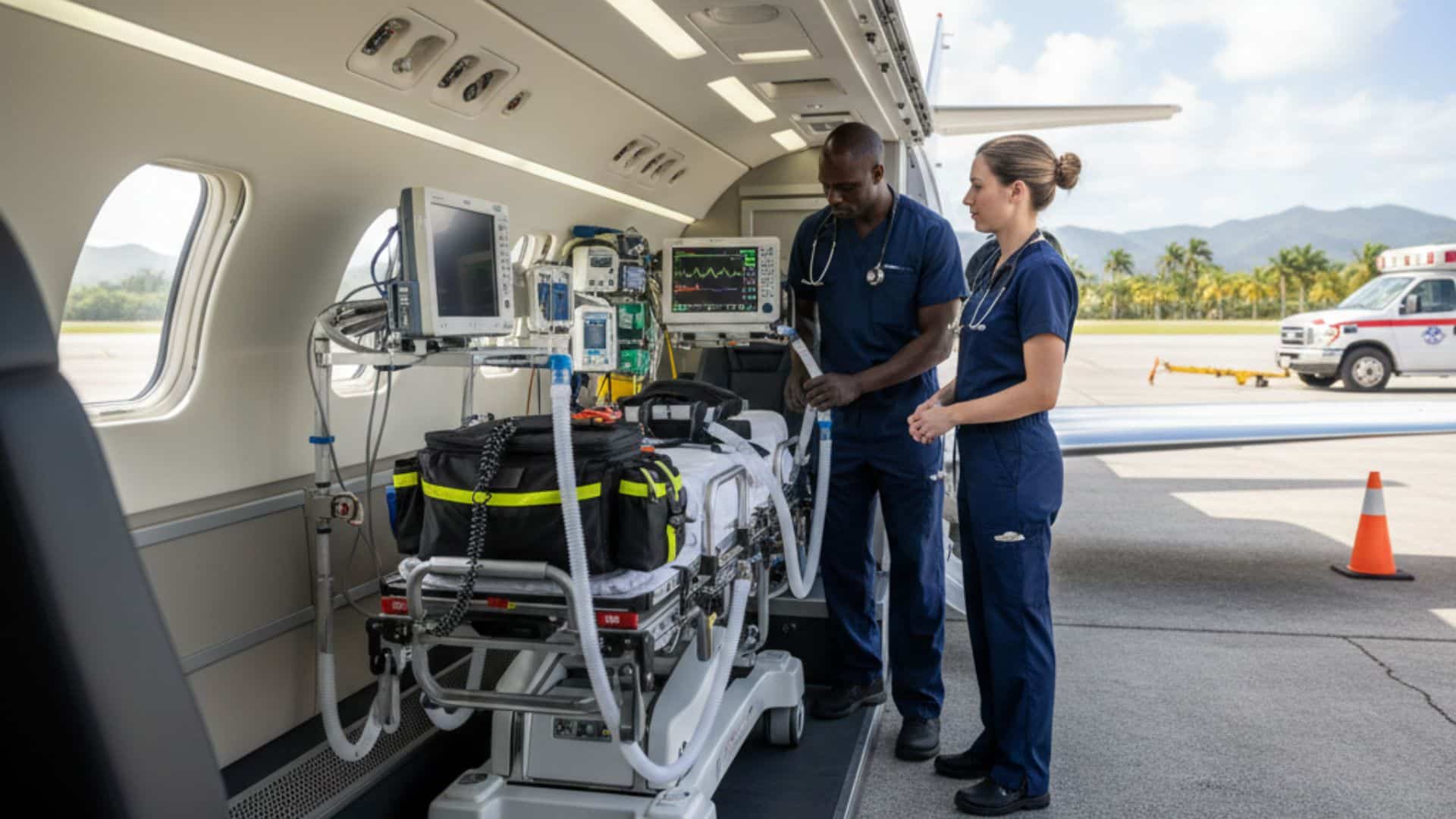
Air medical repatriation differs significantly from mass evacuation operations. It involves transporting patients who require continuous medical supervision, specialised equipment, or intensive care support.
Depending on clinical condition, solutions may include:
| Medical situation | Air transport solution |
| Stable patient | Medical seat on commercial flight |
| Reduced mobility | Medicalised jet or charter aircraft |
| Intensive care | MEDEVAC with ICU configuration |
| Group medical evacuation | Medical charter configuration |
These missions require close coordination between medical teams, insurers, and aviation operators.
How Avico organises emergency repatriation flights
The success of a charter repatriation flight depends on rapid decision-making, global coordination, and the ability to mobilise aircraft assets within hours.
Operations team activation within one hour
In crisis situations, time is critical. Avico’s operations centre is available 24/7 and immediately assesses:
- number of passengers
- security constraints on the ground
- airport availability and restrictions
- medical requirements
- expected departure timelines
Operational mobilisation begins within the first hour following mission validation.
Identifying available aircraft in the region
One of the key challenges is locating suitable aircraft near the affected area.
Thanks to a global network of more than 200 airline partners, Avico can rapidly source:
- regional turboprops
- private jets
- narrow-body aircraft such as Airbus A320 or Boeing 737
- long-haul aircraft such as Boeing 777 or Airbus A330
Aircraft selection depends on:
- passenger volume
- required range
- airport infrastructure constraints
- regulatory authorisations
Coordination with embassies and local authorities
Embassy and diplomatic coordination plays a central role in aircraft charter repatriation operations.
Avico teams work with:
- embassies and consulates
- civil aviation authorities
- transport ministries
- airport operators
- border control agencies
This ensures:
- rapid issuance of special permissions
- streamlined border procedures
- prioritisation of passenger lists
- compliance with health protocols
Government-related missions are also supported through dedicated frameworks for public institutions. government aviation solutions
Overflight and landing permits in crisis conditions
Repatriation missions often require access to restricted airspace or rapidly changing regulatory environments.
Operators must secure:
- overflight permissions
- landing rights
- temporary exemptions (curfews, health restrictions)
- diplomatic clearances
During international crises, these approvals may change hourly, requiring continuous regulatory monitoring.
On-arrival logistics: transfers and continuity of travel
Landing does not always mark the end of the mission. In many cases, onward logistics are required to ensure full passenger continuity.
This may include:
- secure ground transportation
- hotel transit arrangements
- connecting flights
- expedited customs clearance
- medical support upon arrival
Avico in crisis operations: proven track record
Experience is a decisive factor when selecting a charter aircraft repatriation provider.
COVID-19: 45+ flights and 13,000+ passengers repatriated
During the pandemic, Avico coordinated more than 45 emergency air operations across Europe, Africa, Asia, and South America.
|
Indicator |
Result |
| Flights operated | 45+ |
| Passengers repatriated | 13,000+ |
| Continents covered | 4 |
| Mission types | Governments, corporations, NGOs, assistance providers |
These operations took place in extremely challenging conditions:
- sudden border closures
- limited global aircraft availability
- rapidly changing regulations
- diplomatic constraints
CICR mission: 833 former detainees transported
One of the notable humanitarian operations involved the transport of 833 former detainees in October 2020 in coordination with the International Committee of the Red Cross (ICRC).
Such missions require:
- precise operational planning
- enhanced security procedures
- diplomatic coordination
- real-time adaptability
Recent operational examples
Today, charter repatriation flights cover a wide range of scenarios:
- evacuation of corporate staff after political instability
- humanitarian mission transport
- long-distance medical evacuations
- disaster response airlift operations
- multinational continuity planning
Some missions involve multiple aircraft deployed simultaneously to evacuate large groups within hours.
Medical repatriation: operational and clinical requirements
Air medical repatriation requires strict technical and medical standards.
MEDEVAC-equipped aircraft
Medical evacuation missions rely on aircraft configured for intensive care transport, including:
- ventilators
- cardiac monitors
- infusion pumps
- onboard oxygen systems
- ICU modules
Depending on the case, patients may be transported:
- on stretchers
- in isolated medical cabins
- in full ICU configurations
Aircraft can range from dedicated medical jets to partially or fully medicalised wide-body aircraft.
Coordination with medical teams
Each mission is prepared in coordination with:
- attending physicians
- insurance assistance providers
- departure and arrival hospitals
- onboard medical staff
The objective is uninterrupted continuity of care throughout the journey.
Regulatory and medical documentation
International medical transport requires strict compliance with documentation standards:
| Document | Purpose |
| Medical certificate | Flight eligibility validation |
| Fit-to-fly approval | Medical clearance |
| Health authority authorisations | Cross-border compliance |
| Customs documentation | Medical equipment transport |
| Insurance approval | Coverage validation |
Who relies on Avico for repatriation operations?
Embassies and consulates
Diplomatic missions frequently coordinate emergency evacuations of nationals during crises, requiring:
- group evacuation flights
- secure passenger handling
- confidentiality
- coordination with host authorities
Corporations with expatriate staff
Multinational companies integrate crisis scenarios into their business continuity planning.
A crisis charter repatriation flight enables:
- evacuation of employees and families
- operational continuity protection
- risk mitigation strategies
- workforce safety assurance
Some organisations establish pre-agreed frameworks to ensure priority access during emergencies.
Travel insurers and assistance providers
Insurance companies regularly require air medical repatriation and emergency transport solutions focused on:
- speed of execution
- medical compliance
- cost control
- global coverage
Pre-negotiated agreements significantly reduce activation time.
NGOs and international organisations
Humanitarian organisations operate in high-risk environments and rely on aircraft charter repatriation services to:
- evacuate field teams
- move medical staff
- secure sensitive missions
- maintain operational continuity in crisis zones
Anticipating crises: a strategic necessity
Recent global events have demonstrated that crises can emerge without warning, stranding thousands of people within hours. For governments, insurers, and multinational companies, having access to a reliable aircraft charter repatriation partner is now a core component of risk management strategy.
With its COVID-era operational experience, 24/7 operations centre, and global aircraft network, Avico supports organisations facing urgent mobility challenges worldwide.
To prepare a contingency plan or activate an emergency operation, you can contact Avico for urgent repatriation support via Avico contact page or request immediate assistance through emergency charter request.
FAQ — Charter aircraft repatriation
How quickly can Avico organise a repatriation flight?
In emergency situations, Avico’s operations centre is activated immediately, 24/7. Initial flights can depart in under 12 hours depending on destination and regulatory conditions.
What types of aircraft are used for repatriation?
Depending on passenger volume and range requirements, aircraft can vary from regional turboprops to long-haul aircraft such as Boeing 777. Avico selects the most suitable option from a network of 200+ airline partners.
Can Avico manage consular formalities and transit visas?
Avico coordinates with relevant embassies but does not act as a consular service provider. The team facilitates communication and directs stakeholders to appropriate authorities.
Is it possible to prepare a repatriation plan in advance?
Yes. Avico offers framework agreements enabling priority activation in case of crisis, with pre-negotiated commercial conditions and rapid mobilisation capabilities.
votre lecture
 espace presse
In the world of air charter, time is rarely a secondary factor. Whether it is a corporate group that needs to be flown to a conference, an ...
 espace presse
In the energy, aerospace, defense and mining industries, some shipments simply exceed the limits of conventional logistics. Power plant ...
 espace presse
Business aviation is no longer limited to the image of luxury private jets. For companies, private jet charter has become a strategic logistics ...