


Air transport of competition horses : what precautions should be taken ?

Air transport of competition horses requires precise organisation. When a horse needs to travel to an international competition, several elements must be anticipated: health formalities, choice of flight, preparation of the animal, boarding, monitoring during the journey and transport to the competition venue.
Horse air transport involves specific constraints. It is not simply a matter of organising air travel, but of ensuring the safety and well-being of a live animal throughout the journey. Good preparation also helps to limit delays and unforeseen events.
Why transport a competition horse by air?
For competitions organised abroad, horse air transport is particularly suitable for long distances.
Save time over long distances
Air travel significantly reduces journey time compared with road or sea transport. For a competition horse, this time saving can be important in order to limit the overall duration of the journey.
It also makes it possible to reach the destination more quickly and allow recovery time before the start of the competition.
Reduce transport-related fatigue
A prolonged journey can generate fatigue and stress for the horse. Changes in environment, movement and the various stages of the journey should therefore be limited whenever possible.
By reducing journey time, air transport can be a relevant solution for distant destinations.
Facilitate travel to international competitions
International horse transport allows riders, owners and stables to take part in competitions organised in different regions of the world.
Depending on requirements, a horse cargo aircraft can also make it possible to transport several animals as part of the same operation, with organisation adapted to the constraints of the event.
What precautions should be taken before transporting a horse by air?
Preparation is an essential step. Administrative, health and logistical formalities must be checked sufficiently early.
Check health and administrative documents
The rules applicable to transporting a horse may vary depending on the country of departure, transit and destination.
Teams must therefore check the required documents: horse identification, health certificates, veterinary documents and import and export authorisations.
Some formalities may take time. Anticipating them helps to reduce the risk of delay or blockage at the time of departure.
Prepare the horse for the journey
A veterinarian must check the horse’s health before travel. Teams must also adapt its diet and hydration to the travel conditions.
The animal’s behaviour is also important. For some horses, gradual preparation for transporting animals by air can help to limit stress linked to a new environment.
Choose a suitable airport and facilities
Not all airports offer the same facilities for handling live animals.
The choice must therefore take into account the airport’s capabilities, available services, formalities to be completed and the distance from the competition venue.
This preparation helps to limit waiting times before departure and after arrival.
How is a horse transported by air?
Horse air freight involves several stages that teams must coordinate, from departure from the stable to arrival at the competition venue.
Transport to the airport
A specialised carrier first transports the horse to the airport. Teams adapt the schedule to the flight timetable and the time required to complete the various checks.
Sufficient time must be allowed for formalities while avoiding excessively long waiting times before boarding.
Boarding and installation in the aircraft
The horses are placed in equipment adapted to their transport. Loading must be carried out carefully in order to limit the animal’s stress and ensure its safety.
When several horses travel together, their installation must also be anticipated according to the organisation of the flight.
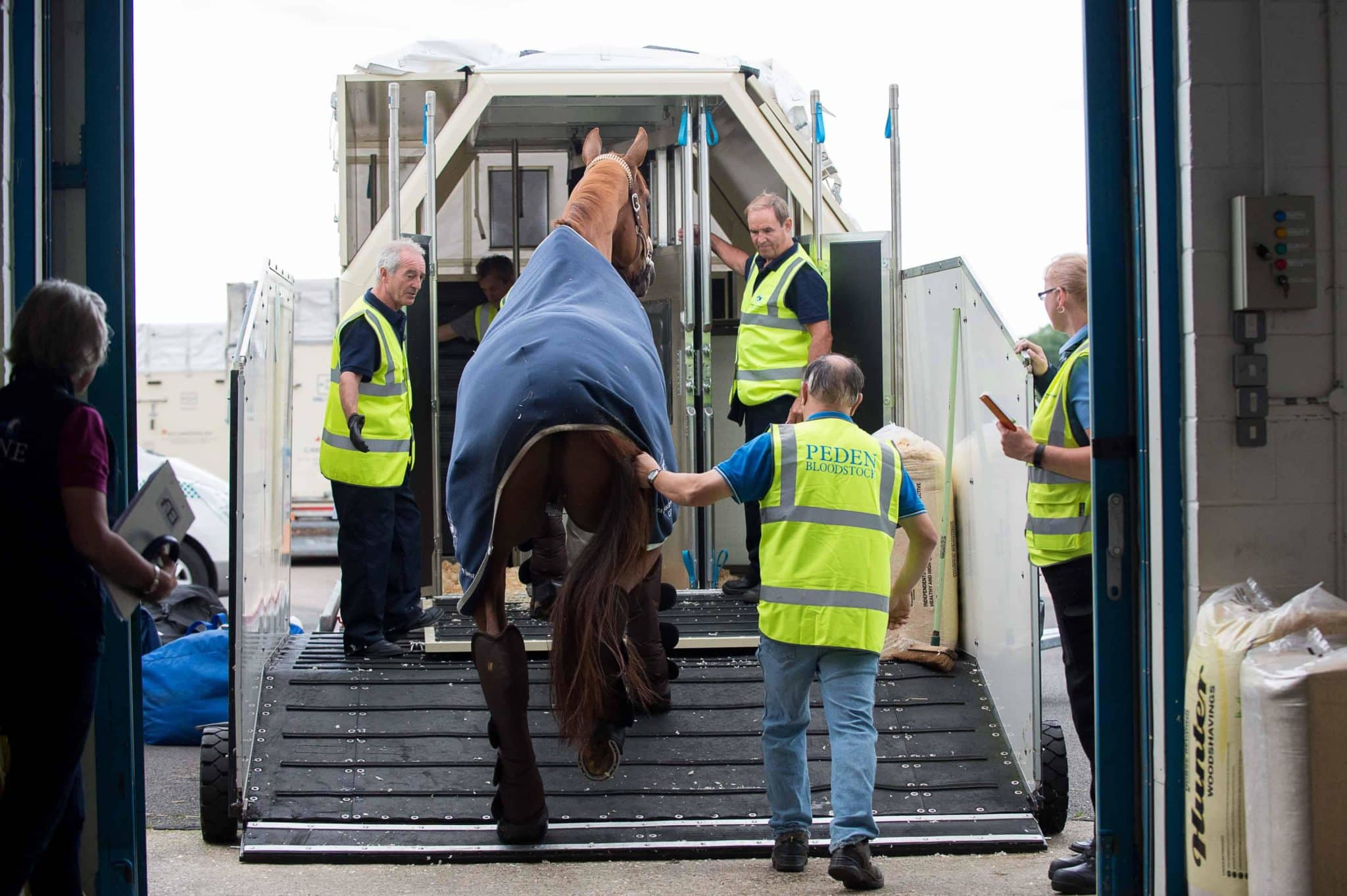
Monitoring during the flight
The horse’s well-being remains a priority during the journey. Its behaviour, general condition and hydration must in particular be monitored.
Transport conditions are adapted to the presence of live animals and the planned duration of the flight.
Unloading and transport to the competition venue
After landing, the horse is unloaded and may undergo various health, administrative or customs checks.
It is then transported to its accommodation or to the competition venue. Good coordination helps to reduce waiting times and support its recovery after the journey.
What role does air logistics play in an international competition?
Transporting a horse involves several stakeholders. Logistical coordination is therefore essential.
Coordination of schedules and stopovers
Flight schedules must be compatible with the constraints of the competition and the handling capabilities of the airports.
When a stopover is planned, its duration and the conditions under which the horse will be handled must also be included in the organisation.
Management of authorisations and formalities
International horse transport may require various aviation, health or customs authorisations.
These procedures must be prepared sufficiently early so that a missing document or authorisation does not disrupt the journey.
Coordination of ground operations
Ground operations include the horse’s arrival at the airport, checks, loading, ground handling and unloading.
Coordinating the various stakeholders helps to ensure continuity between all stages of the journey.
How to anticipate the air transport of horses for a competition?
Preparing in advance makes it easier to control travel constraints and reduce the risk of unforeseen events.
Prepare the journey several weeks in advance
Some health or administrative formalities may require several weeks.
Organising transport sufficiently early makes it possible to check flight availability, prepare documents and choose an itinerary adapted to the destination and the competition.
Plan for possible unforeseen events
A delay, schedule change or operational constraint can always occur.
It is therefore preferable to allow some flexibility in the schedule and, whenever possible, to consider urgent charter solutions in the event of an operational change. This anticipation helps to limit the consequences of a change on the horse’s arrival.
Rely on experienced operational partners
Air transport of horses involves several areas of expertise: flight organisation, ground transport, airport handling, health formalities and coordination of the various service providers.
Working with experienced partners helps to facilitate communication between stakeholders and better anticipate the constraints specific to each operation.
Frequently asked questions about air transport of horses
How do you transport a competition horse by air?
Transport requires specific preparation including transfer to the airport, health and administrative checks, installation in suitable equipment, monitoring during the flight and then transfer to the competition venue.
What documents are required to transport a horse internationally?
Documents vary depending on the destination. They may include the horse’s identification document, health certificates and various administrative or customs documents.
Why use air transport for a competition horse?
Air travel significantly reduces journey time over long distances and therefore facilitates travel to international competitions.
How can you ensure a horse’s well-being during air transport?
The animal should be prepared before departure, suitable facilities should be used, it should be monitored during the journey and the applicable regulations and protocols must be followed.
How much time should be allowed to organise the air transport of horses?
The time required depends on the destination, the number of horses, the necessary authorisations and the constraints of the competition. It is preferable to anticipate the journey several weeks in advance.
Plan your air operation in advance and benefit from professional support for the preparation and monitoring of your flights. Contact Avico to discuss your operational requirements.
votre lecture
Only around thirty kilometres separate Nice Côte d’Azur Airport from Monaco. By road, however, that short distance can quickly become a ...
The logistics of a sports club’s travel are not limited to organising a trip before each match. Over a full season, teams have to manage a ...
Organising a sports event involves numerous journeys: teams, staff, managers, sponsors, partners, VIP guests or production teams may sometimes ...