


Private jet charter for companies: which aircraft, what cost, and how does it work?

Business aviation is no longer limited to the image of luxury private jets. For companies, private jet charter has become a strategic logistics tool to optimize business travel, access underserved destinations, and secure executive schedules.
The wide range of available aircraft makes it possible to match the solution precisely to operational needs, rather than defaulting to high-end jets.
Understanding the differences between aircraft categories is therefore the first step in any corporate private jet charterdecision process.
Private aircraft options for companies
Light jet (3–6 passengers): short-haul and maximum flexibility
Light jets represent the entry point into business aviation. Designed for short to medium-haul trips, they are ideal for executives and commercial teams requiring speed and flexibility.
Their main advantage lies in access to smaller airports. They can operate from short runways, allowing direct arrival closer to business locations.
Instead of connecting flights and long ground transfers, companies benefit from true door-to-door efficiency.
Typical use cases include:
- multi-site meetings in a single day
- executive committee travel
- urgent business missions
- industrial audits and site visits
Typical routes include Paris–Milan, London–Munich, or Madrid–Geneva.
Midsize jet (7–9 passengers): European versatility
Midsize jets are currently the backbone of the corporate aviation market. They offer greater range and cabin comfort, allowing longer European flights or short intercontinental routes without stops.
They also enable in-flight productivity. With quieter cabins and meeting-style seating, teams can work during the flight.
This category is particularly relevant when several decision-makers travel together and need both comfort and efficiency.
Turboprop (5–9 passengers): cost-efficient and regional access
Often underestimated, turboprops are one of the most cost-effective solutions for corporate travel.
They are slightly slower than jets but highly efficient on short routes (under 2 hours).
Their main advantage is access to regional airports and short runways, making them ideal for industrial sites or remote locations.
In many cases, total travel time remains comparable to jets, while significantly reducing charter costs.
Airliner charter (30–200 passengers): groups and operations
When passenger numbers increase, chartering a full commercial aircraft becomes more efficient than using multiple private jets.
This solution is commonly used for:
- technical team movements
- corporate events and conventions
- industrial operations abroad
- crew rotations on large projects
Contrary to common belief, airliner charter is not limited to tourism. It is widely used by corporations for operational logistics and schedule control.
How to choose the right aircraft
Decision matrix: passengers × distance × budget
| Passengers | Distance | Recommended aircraft | Key benefit |
|---|---|---|---|
| 2–4 | < 1,500 km | Light jet | Maximum speed |
| 5–8 | Europe-wide | Midsize jet | Comfort + range |
| 5–9 | < 1,000 km | Turboprop | Cost efficiency |
| 15–200 | Any distance | Airliner charter | Group efficiency |
The best solution is not always the fastest—but the one that optimizes total travel cost and time.
When private jets outperform commercial flights or trains
Private jets become highly competitive when multiple constraints apply:
- rigid schedules
- multiple destinations
- lack of direct routes
In many European cases, a two-day trip via commercial travel can be reduced to a single day using a private jet.
This is where the real value lies. The ROI comes from time saved, not luxury.
👉 See our analysis on the profitability of private jets for businesses
Destinations unreachable by commercial airlines
Private aviation gives access to over 4,000 airports in Europe, compared to only a few hundred served by commercial airlines.
This allows direct access to:
- industrial zones
- mining regions
- energy sites
- remote business hubs
For companies looking to
👉 charter a private jet
this expanded network is a key advantage.
Private jet charter costs in 2026
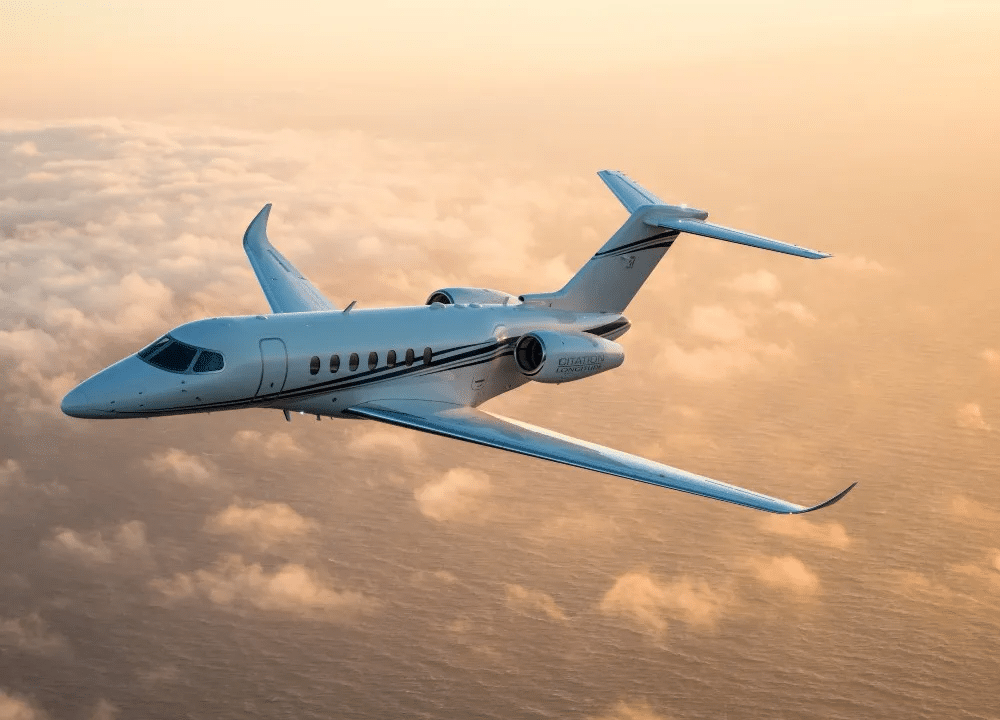
Price ranges by aircraft type
| Aircraft | Example route | Estimated cost |
|---|---|---|
| Light jet | Paris – Geneva | €6,000 – €9,000 |
| Midsize jet | Paris – Athens | €18,000 – €28,000 |
| Turboprop | Paris – Zurich | €4,000 – €6,500 |
| Airliner (100 pax) | Paris – Barcelona | €45,000 – €80,000 |
These prices generally include crew, maintenance, and insurance.
Additional costs to consider
Additional fees may apply depending on the mission:
- aircraft repositioning
- crew overnight stay
- de-icing in winter
- catering services
- airport and international taxes
Transparent pricing is essential for corporate travel buyers.
Empty legs: reduced-cost opportunities
Empty leg flights (return flights without passengers) can offer significant discounts.
👉 Learn more about empty leg flights
However, they depend on aircraft availability and are not always suitable for critical business travel requiring flexibility.
Integrating private aviation into corporate travel policy
Defining eligibility criteria
Companies typically structure private jet usage based on:
- operational urgency
- lack of direct routes
- multi-stop itineraries
- critical personnel transport
This ensures private aviation is seen as a business tool, not a luxury perk.
Accounting and tax considerations
In most European jurisdictions, private jet charter for business purposes is tax-deductible, provided it is economically justified.
Clear documentation and business purpose are essential for compliance.
Carbon offset and ESG strategy
Environmental impact is now a key decision factor. Companies are integrating private aviation into broader ESG policies through:
- certified carbon offset programs
- selection of fuel-efficient operators
- optimized passenger loads
Avico offers carbon offset solutions calculated at the time of booking.
The booking process with Avico
Step 1: briefing your requirements
The process starts with defining:
- route and schedule
- number of passengers
- operational constraints
Companies can explore
👉 Avico private jet solutions
Step 2: proposal within 2 hours
A detailed quote is provided within two hours, including several aircraft options to compare cost, comfort, and flexibility.
Step 3: contract and operations
Once confirmed, the contract includes:
- insurance coverage
- cancellation terms
- operational responsibilities
Passenger lists can usually be updated until a few hours before departure.
👉 You can directly
request a private jet quote
FAQ – Corporate private jet charter
When is private jet charter cost-effective vs business class?
From 3–4 passengers on European routes, especially when factoring time savings.
Can passenger lists be modified?
Yes, up to a few hours before departure depending on regulations.
How quickly can a jet be arranged?
2–4 hours in Europe for simple missions.
Are long-term corporate contracts available?
Yes, with negotiated rates and priority access.
How does carbon offset work?
It can be included at booking, based on certified programs.
Conclusion
Private jet charter for companies is no longer about prestige—it’s about operational efficiency.
Choosing between light jets, midsize jets, turboprops, or airliner charters depends on aligning mission requirements with cost and flexibility.
When integrated into a structured travel policy, private aviation becomes a powerful tool for productivity, time management, and logistical control.
👉 Need a fast and reliable solution?
Request a private jet quote
votre lecture
 espace presse
In an increasingly unstable global environment marked by geopolitical tensions, natural disasters, and health crises, aircraft charter ...
 espace presse
In the world of air charter, time is rarely a secondary factor. Whether it is a corporate group that needs to be flown to a conference, an ...
 espace presse
In the energy, aerospace, defense and mining industries, some shipments simply exceed the limits of conventional logistics. Power plant ...