


Air Freight Broker: What Is Their Role Exactly?

In international transport, every hour can count. An industrial part halting a production line, medical equipment needed urgently, or goods that can’t move through standard routes: these are the situations where finding an air solution within hours becomes critical. This is exactly the context in which the air freight broker operates — a role that goes far beyond simply finding an available aircraft.
Sitting at the crossroads of transport, chartering and international logistics, this cargo charter broker analyzes the need, identifies the right capacity, negotiates with operators, and coordinates the operation through to completion. They can rely on scheduled flights when those meet the requirements, but they can also put together a charter solution when volume, timing, destination or the nature of the cargo demands it.
Their main strength: giving a company broader access to the air market without having to deal directly with a wide range of airlines and operators.
What an Air Freight Broker Actually Does
The job of an air freight broker starts with a precise analysis of the need: the nature of the goods, weight, volume, dimensions, origin, destination, required date, and any regulatory constraints all shape the possible solution.
Unlike an approach limited to finding a rate per kilo, a broker thinks in terms of an overall logistics solution. They compare several options: available capacity on a scheduled flight, routing through a transfer hub, a dedicated cargo aircraft, or a one-off charter.
This ability to weigh up different options becomes especially valuable once requirements fall outside the norm. An urgent need, a poorly served destination, or out-of-gauge cargo can quickly make a standard booking insufficient — the air logistics intermediary then turns an operational need into a workable transport scenario.
Negotiating capacity across a network of operators
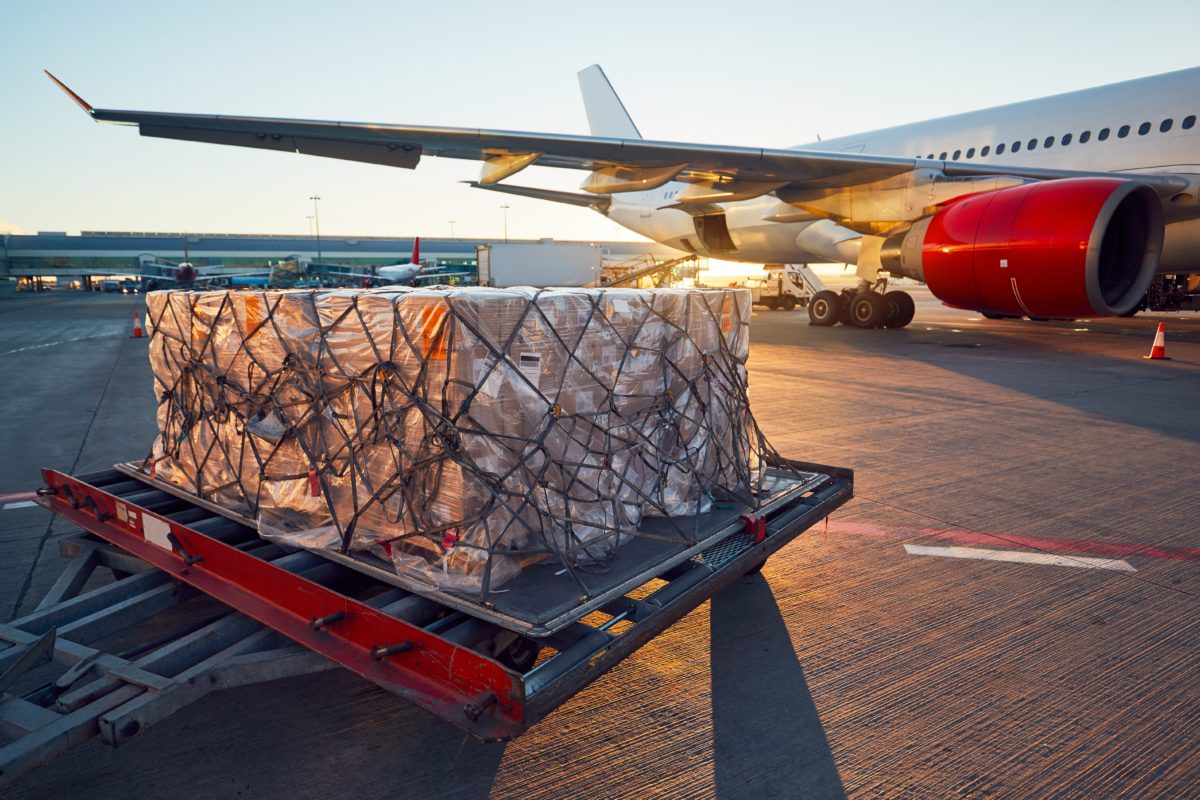
A broker relies primarily on a network of airlines, cargo operators and specialized partners. Their role is to identify capacity that’s genuinely available and select what matches the client’s constraints.
This search isn’t limited to a single operator: depending on the mission, several airlines can be consulted to compare aircraft, schedules, usable airports, payload capacity and commercial terms.
A broker brings sharp market knowledge, and negotiates the terms of the operation with the various parties involved. The goal isn’t just the lowest price — it’s finding the best balance between cost, timing, reliability and technical constraints.
This matters even more in a market where capacity can shift quickly. IATA notes that agents and intermediaries specializing in air cargo play a structuring role in the global logistics chain, and are bound by a set of rules governing their relationships with airlines.
For a company, working with a broker means not depending on a single air contact, and widening the search for solutions.
End-to-end coordination, without owning an aircraft
An air freight broker doesn’t own the aircraft used to move the cargo — that’s actually one of the defining features of the job. They connect the client’s demand with the capacity offered by operators, but their role often goes well beyond a simple match-making service.
An air cargo charter operation involves checking the aircraft’s compatibility with the cargo, operating conditions, required authorizations, airport constraints, and coordination with ground handlers. Depending on the operation, managing ULDs, customs clearance or storage can also come into play.
The broker’s role is then to keep everything coherent through to departure and, depending on the service, throughout the operation itself. At Avico, for instance, the operations teams support charter operations and run a 24/7 desk dedicated to sourcing real-time solutions and tracking operations.
To go further, read our complete guide to air cargo charter.
Broker, Forwarder or Airline: What’s the Difference?
All three players are part of the air cargo chain, but their functions aren’t the same.
The forwarder organizes the movement of goods on behalf of their client, relying on existing transport capacity. The broker, meanwhile, positions themselves as a specialist in sourcing, negotiating and structuring air solutions, with the ability to mobilize several operators and, when needed, arrange a dedicated charter.
These roles often complement one another rather than compete.
The forwarder works with existing capacity
The forwarder, or freight forwarder, is a key player in the logistics chain. They organize transport based on their client’s needs and can coordinate different modes of transport and services.
In air cargo, their work typically involves booking capacity with airlines and organizing the associated operations. IATA highlights the central role freight forwarders play in international goods transport, and runs a dedicated program for cargo agents and intermediaries.
For standard goods, regular volumes and predictable timelines, this setup usually meets the need. Things change once transport falls outside the usual framework — and that’s exactly where an air freight broker becomes relevant.
A broker can go as far as a dedicated charter
A broker can source available capacity on the market, but can also go as far as chartering a dedicated aircraft when the need justifies it.
Chartering means mobilizing an aircraft for a specific mission, with scheduling built around the client’s constraints. The choice of aircraft depends on several factors: cargo quantity, package dimensions, distance, departure and arrival airports, aircraft availability, and operational constraints.
This approach becomes relevant when a standard routing can’t meet the deadline or the characteristics of the load — particularly when time itself carries major economic weight. For an industrial component halting a factory, for example, a few hours saved in transit can be worth more than the cost difference between a scheduled solution and a charter.
The broker then brings their expertise to determine whether an air cargo charter is genuinely justified, select the right aircraft, and organize the operation with the operator.
When Should You Use an Air Freight Broker?
Not every shipment needs a broker. For a regular, standardized flow with good service coverage, a traditional air shipment organized by a forwarder works perfectly well.
Using a broker becomes worthwhile when the situation calls for more flexibility, or capacity that’s hard to find. Several signals should prompt a company to consider this option:
- a particularly short delivery window;
- a large volume or bulky cargo;
- a poorly or barely served destination;
- a tight scheduling constraint;
- goods requiring special precautions;
- a capacity shortage on usual routes;
- a one-off need that doesn’t justify setting up a permanent logistics arrangement.
The broker’s value lies in their ability to look for a solution beyond the usual channels.
Sensitive, urgent or out-of-gauge cargo
Certain goods make choosing a carrier particularly complex: industrial equipment, aerospace parts, medical products, or heavy and oversized loads.
For out-of-gauge cargo, dimensions and weight can rule out many aircraft and require a plane with a suitable configuration. At that point the constraints are no longer just commercial — they become technical and operational too.
In the energy, aerospace or infrastructure sectors, air transport of exceptional loads often responds to situations where downtime on a piece of equipment carries a significant cost. Industrial machinery, engines or bulky equipment can require a dedicated charter solution.
Urgency is another common scenario: when a part needs to be delivered quickly to avoid a production shutdown, waiting for the next flight with enough available capacity can be incompatible with the company’s needs. In that case, the broker searches several options at once to find the most realistic solution within the given timeframe.
Needing a neutral point of contact across several operators
Working with an air freight broker can also address a simpler need: having a single point of contact able to compare several solutions.
A company contacting several airlines directly has to analyze the proposals itself, check technical constraints, and compare offers that aren’t always directly comparable. The broker centralizes this process: they query different operators, analyze their proposals, and present the client with a solution that matches their requirements.
This intermediary role is especially valuable for a company that occasionally handles complex operations without an in-house team dedicated to air chartering. Corporate air freight brokerage answers a logic of flexibility: the organization benefits from specialized expertise without having to maintain that capability in-house on a permanent basis.
The goal isn’t to systematically replace the forwarder, but to bring in a specialized point of contact when the complexity of the operation calls for it.
Why a Broker Adds Real Value
A broker’s added value rests on three pillars: market knowledge, negotiating power and operational expertise.
Their network lets them identify solutions a shipper might not otherwise have direct access to. Their negotiating power then helps optimize the terms of the operation. And their experience helps anticipate difficulties that could jeopardize the shipment.
It’s not just about finding “an aircraft” — it’s about finding the right aircraft, at the right time, for the right cargo, under the right operating conditions.
This is exactly why the air freight broker’s role is particularly relevant for urgent, unusual or complex operations.
For companies looking for a solution tailored to their needs, Avico offers dedicated support for air freight and chartering. Discover our air freight offer.
FAQ: Frequently Asked Questions About Air Freight Brokers
Is an air freight broker more expensive than a traditional forwarder?
Not necessarily. A broker is generally paid for their expertise, market access and ability to negotiate the terms of the operation. Their involvement can help compare several solutions and optimize the overall cost of transport, particularly when the need falls outside standard channels.
Can a broker handle a single, one-off shipment?
Yes. Contrary to a common assumption, a broker’s involvement isn’t reserved for regular logistics flows. They can step in for a single operation, particularly when it’s urgent, unusual or technically complex.
What’s the difference between a broker and an airline?
The airline operates the aircraft and carries out the transport. The broker acts as an intermediary: they source and negotiate capacity with one or more operators and can arrange a charter solution tailored to the client’s needs.
When should you choose a cargo charter?
A charter can be considered when regular capacity can’t meet the need — particularly in cases of urgency, large volume, out-of-gauge cargo, a specific destination, or a tight scheduling constraint. A case-by-case analysis helps determine whether this solution is genuinely the right fit.
Conclusion
An air freight broker is, above all, a specialized facilitator. Standing between the shipper and the operators, they turn a logistics constraint into a concrete air solution. Sourcing capacity, negotiating, selecting the aircraft, coordinating operations and follow-up: their involvement can cover the entire process, without ever owning the aircraft themselves.
For a standard, regular shipment, a forwarder is often perfectly suited. But as soon as cargo is urgent, sensitive, bulky or hard to move, working with an air freight broker can offer extra flexibility and open the door to dedicated charter solutions.
Trusting us with your next cargo shipment means benefiting from support tailored to the real constraints of your operation — from sourcing capacity through to coordinating the transport.
votre lecture
 Blog
Blog
When a patient is hundreds or thousands of kilometres from a facility capable of providing the care they need, air transport can become an ...
 Blog
Blog
A professional football season isn’t decided on the pitch alone. Between league fixtures, domestic cups and European competitions, clubs ...
 Blog
Blog
Long reserved for the most frequent business aviation travelers, the private jet membership card has gradually established itself as an ...