


Air Cargo Charter: The Complete Guide to Chartering a Cargo Aircraft

In a world of globalized and often strained supply chains, air cargo transport remains the fastest way to move critical goods. According to the International Air Transport Association (IATA), more than 60 million tonnes of air freight are transported worldwide every year.
However, when belly cargo capacity on scheduled flights is insufficient, or when urgency demands it, companies turn to a specific solution: air cargo charter services.
Whether transporting urgent industrial parts, moving oversized cargo, or organizing deliveries to poorly served destinations, chartering a dedicated cargo aircraft provides maximum logistical flexibility. This solution allows companies to control delivery timelines, flight routes, and loading capacity.
This guide is designed for logistics managers and supply chain professionals who want to understand when to charter a cargo aircraft, how to choose the right aircraft, and what budget to expect. The objective: give you the insights needed to make an informed decision before requesting a cargo charter quote.
What is an Air Cargo Charter?
An air cargo charter consists of renting all or part of a cargo aircraft to transport goods on a specific route.
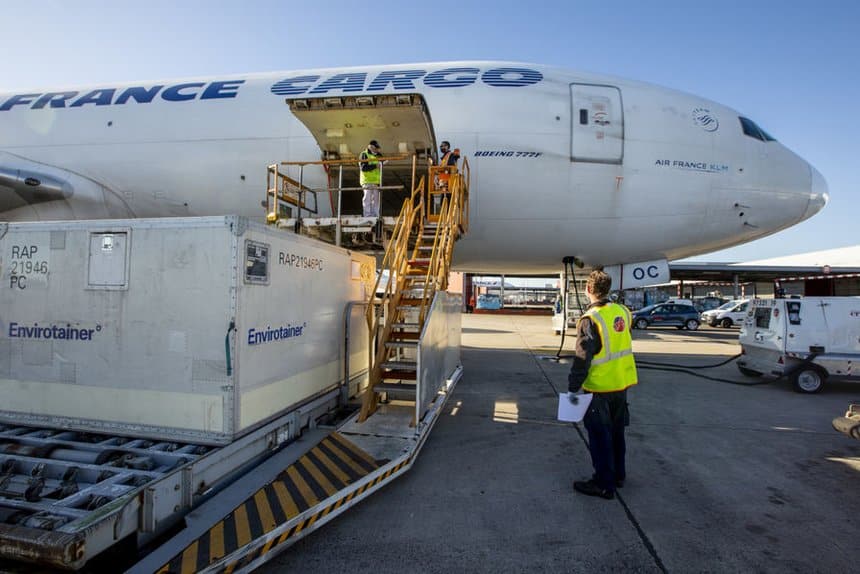
Unlike air freight shipped in the cargo hold of commercial flights, this solution provides a dedicated aircraft for your shipment, with flight schedules and routes tailored to your operational needs.
This option becomes particularly relevant when logistical constraints exceed the capabilities of traditional air freight services.
Full Charter vs Part Charter
Two main charter models are generally available.
Full Charter
- The aircraft is entirely dedicated to a single shipment
- Ideal for large or urgent cargo
- Total flexibility on routes and departure times
Part Charter
- Cargo space is shared between multiple shippers
- Costs are divided among customers
- A hybrid solution between scheduled air freight and full cargo charter
The choice mainly depends on cargo volume, urgency, and available budget.
Difference Between Scheduled Air Freight and Dedicated Cargo Charter
Traditional air freight often relies on available cargo space in passenger aircraft holds or on scheduled cargo routes. Departures follow fixed schedules.
In contrast, a cargo charter flight is organized specifically for your shipment.
| Criteria | Standard Air Freight | Cargo Charter |
| Capacity | Shared | Dedicated aircraft |
| Schedule | Fixed | Flexible |
| Routes | Existing network | Custom routes |
| Cargo types | Standard freight | Oversized, urgent cargo |
To better understand how global cargo logistics works, you can also explore our guide on air freight transportation.
When Should You Charter a Cargo Aircraft?
A cargo charter is not necessary for every shipment. It becomes relevant in situations where traditional logistics solutions reach their limits.
Oversized or Heavy Cargo (>5 tonnes)
Some cargo simply cannot be transported on scheduled flights, including:
- industrial machinery
- turbines
- energy equipment
- vehicles or helicopters
These shipments require cargo aircraft equipped with side or nose loading doors, capable of accommodating large pallets and heavy loads.
Specialized aircraft such as the Airbus Beluga, known for its exceptional cargo capacity, illustrate this type of extraordinary transport.
Industrial Emergencies: Production Line Shutdowns
In manufacturing, a halted production line can cost hundreds of thousands of euros per day.
When a critical component is missing, chartering a cargo aircraft allows companies to:
- prevent prolonged factory shutdowns
- reduce delivery times dramatically
- ensure direct transportation without transfers
In such cases, a cargo aircraft can often be mobilized within hours.
Transport of Sensitive or High-Value Goods
Some shipments require specific handling conditions, such as:
- medical equipment
- pharmaceutical products
- artworks
- electronic components
A chartered aircraft ensures:
- full control of the logistics chain
- precise delivery timelines
- enhanced security.
Remote or Poorly Served Destinations
Commercial air networks do not cover every destination.
In certain emerging markets, mining regions, or remote industrial sites, scheduled flights may be rare or nonexistent.
In these cases, cargo charter allows companies to organize direct flights to the closest airport to the final site.
Types of Cargo Aircraft Available for Charter
The aircraft selection depends on cargo weight, volume, and flight distance.
Light Cargo Aircraft (ATR 72F, Saab 340)
Typical capacity: up to 8 tonnes
These aircraft are used for:
- regional routes
- urgent short-distance deliveries
- small industrial shipments
Advantages:
- lower charter costs
- access to secondary airports
- high operational flexibility
Medium Cargo Aircraft (Boeing 737F, Airbus A321F)
Typical capacity: 20 to 28 tonnes
These aircraft form the backbone of regional and continental cargo transport.
They allow:
- fast turnaround operations
- standardized pallet loading
- wide geographical coverage.
Large Cargo Aircraft (Boeing 747F, Antonov 124)
Capacity: 100 tonnes or more
These aircraft are used for:
- major industrial projects
- humanitarian missions
- transport of military or energy infrastructure equipment
The Boeing 747 Freighter remains one of the most widely used cargo aircraft worldwide, while the Antonov 124 is renowned for transporting exceptional loads.
Comparison Table of Major Cargo Aircraft
| Aircraft Type | Capacity | Range | Main Use | Indicative Cost |
| ATR 72F | 7–8 tonnes | ~1,500 km | Regional | € |
| Saab 340 | 7 tonnes | ~1,700 km | Express freight | € |
| Boeing 737F | 20 tonnes | ~3,700 km | Continental | €€ |
| Airbus A321F | 27 tonnes | ~4,000 km | Medium cargo | €€ |
| Boeing 747F | 100+ tonnes | ~8,000 km | Intercontinental | €€€ |
| Antonov 124 | 120 tonnes | ~4,800 km | Oversized cargo | €€€€ |
How the Cargo Charter Process Works with Avico
Organizing a cargo charter requires precise logistical coordination involving operators, ground handlers, airport authorities, and customs.
Here are the key steps.
Step 1 — Cargo Assessment
Everything starts with a detailed analysis of the shipment:
- weight
- dimensions
- type of goods
- regulatory constraints
This step helps determine the most suitable aircraft type.
Step 2 — Aircraft Sourcing and Solution Proposal
Thanks to a global network of cargo operators, Avico identifies:
- available aircraft
- suitable airports
- possible departure slots
Several logistics scenarios may be proposed to optimize timelines and costs.
Step 3 — Logistics Coordination
Once the aircraft is selected, the teams coordinate:
- cargo loading operations
- airport ground handling
- customs formalities
- cargo monitoring
This integrated management ensures a smooth and secure logistics chain.
Step 4 — Flight Execution and Monitoring
During transport, teams ensure:
- cargo tracking
- coordination with airports
- real-time operational support
This supervision helps quickly manage any unexpected issues.
How Much Does an Air Cargo Charter Cost?
The price of a cargo charter can vary significantly depending on several factors.
To better understand air freight charter rates, it is important to distinguish the main cost drivers.
Factors That Influence the Price
Several variables determine the final cost:
- flight distance
- aircraft type
- cargo weight and volume
- aircraft availability
- planning timeframe
- airport and fuel fees
An urgent flight mobilized within hours will generally be more expensive than a charter planned in advance.
Indicative Price Ranges
Below are typical market estimates.
| Operation Type | Estimated Price |
| small regional cargo aircraft | €15,000 – €40,000 |
| medium cargo aircraft (737F) | €70,000 – €180,000 |
| large widebody cargo aircraft (747F) | €400,000 – €900,000 |
Prices may vary depending on seasonality, aircraft availability, and logistical complexity.
How to Optimize Charter Costs
Several strategies can help reduce the budget:
- part charter solutions
- cargo consolidation
- using aircraft return legs (empty legs)
An experienced air charter broker can identify opportunities to lower charter costs.
Why Choose Avico for Your Cargo Charter?
Organizing a cargo charter requires specific expertise and a reliable operator network.
Over 25 Years of Experience
Founded in 1996, Avico benefits from:
- a global network of cargo airlines
- recognized expertise in aircraft charter operations
- experience with complex industrial logistics projects.
24/7 Availability
Operational teams are available 24 hours a day, 7 days a week to respond to urgent situations.
This responsiveness allows Avico to deploy a cargo aircraft anywhere in the world within hours.
FAQ – Air Cargo Charter
How long does it take to organize a cargo charter?
Depending on the complexity of the operation, a cargo charter can be organized within a few hours for urgent shipments, or several days for complex logistics projects.
Can you charter a cargo aircraft for a single pallet?
Yes, through part charter solutions. However, for very small shipments, traditional scheduled air freight is often more cost-effective.
What types of goods can be transported?
Cargo aircraft can transport a wide range of goods, including:
- industrial equipment
- medical supplies
- perishable products
- live animals
- dangerous goods (with certification).
What is the price difference between belly cargo and cargo charter?
Cargo charter is usually more expensive because the aircraft is entirely dedicated to your shipment, but it offers greater flexibility and shorter delivery times.
Does Avico handle customs procedures?
Yes. Avico coordinates the entire logistics chain, including:
- documentation
- airport coordination
- customs clearance procedures.
Conclusion
Air cargo charter is a strategic solution for companies facing major logistical constraints: industrial emergencies, oversized cargo, remote destinations, or the transport of sensitive goods.
By providing a dedicated aircraft, full flexibility, and optimized timelines, cargo charter services meet the needs of the most demanding supply chains.
With over 25 years of experience and a global network of operators, Avico supports companies in organizing their cargo charter operations.
Need to charter a cargo aircraft?
Contact our team to request a cargo charter quote and identify the best solution for your transport needs.
votre lecture
 Uncategorized
Traveling with your dog or cat is far from a minor formality. On commercial flights, pet transportation conditions vary depending on the airline, ...
 Uncategorized
With dedicated business aviation facilities and an immediate proximity to Paris, Paris-Le Bourget Airport has established itself as a key hub for ...
 Uncategorized
With its volcanic cliffs, white villages perched above the caldera, and world-famous sunsets, Santorini has established itself as one of ...