


Air cargo: a strategic pillar of international supply chains in 2025

In 2024, global air freight volumes approached pre pandemic levels, exceeding 60 million tonnes transported worldwide according to industry data. In a context marked by geopolitical tensions, industrial relocations and increasing pressure on delivery times, air cargo has reasserted itself as a cornerstone of the international supply chain. For businesses operating across continents, speed and reliability are no longer competitive advantages but operational necessities.
From pharmaceuticals to high value electronics, air transport of goods plays a decisive role in maintaining production continuity and meeting strict service level agreements. In 2025, as supply chains become more complex and digitised, air cargo continues to demonstrate strategic relevance.
Air cargo: definition and role in global logistics
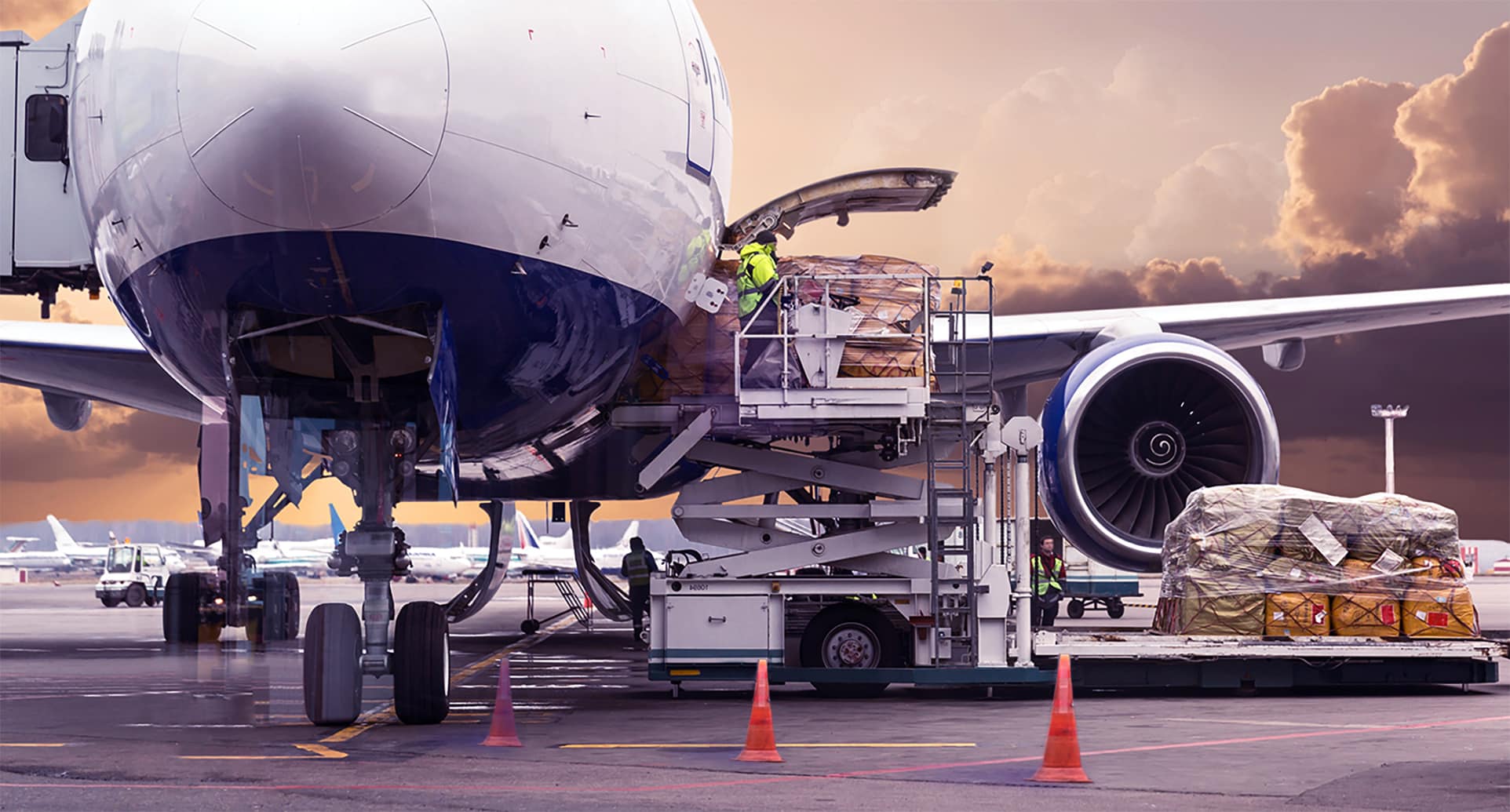
Air cargo refers to the commercial air transport of goods, whether on scheduled freighter aircraft, in the belly hold of passenger aircraft or via dedicated cargo charter solutions. Unlike other transport modes, air freight is primarily selected for its speed and predictability.
Why air transport is preferred for critical flows
For critical flows, time is often the determining factor. Manufacturing industries operating on just in time models cannot afford prolonged transit periods. Air cargo drastically reduces lead times between continents, enabling rapid replenishment of inventories.
In sectors such as automotive or electronics, a delayed component can halt an entire production line. By contrast, air freight offers transit measured in hours rather than weeks. This responsiveness is essential to maintaining operational continuity within the international supply chain.
Furthermore, air transport of goods benefits from high security standards and controlled handling environments, reducing risks of theft or damage for high value shipments.
Differences between air cargo, maritime freight and road transport
Each transport mode serves distinct logistical objectives.
Maritime freight is cost effective for large volumes and non urgent goods, but transit times are significantly longer and subject to port congestion. Road transport provides flexibility for regional distribution, yet is limited by geography and border constraints.
Air cargo occupies a complementary position. It combines global reach with unparalleled speed, albeit at a higher unit cost. For companies balancing cost against service performance, modal choice depends on product value, urgency and contractual obligations.
Impact on lead times, reliability and SLAs
In contractual environments governed by strict SLAs, delivery performance is critical. Air freight reduces variability in transit times and enhances predictability. Airlines operate within tightly regulated slot systems and security frameworks, contributing to schedule reliability.
For multinational corporations, integrating air cargo into logistics strategies strengthens resilience. When maritime routes are disrupted or geopolitical events affect ground corridors, air transport of goods provides an alternative capable of preserving supply chain continuity.
What goods are transported by air cargo?
The profile of goods moved by air cargo reflects its premium positioning within global logistics.
High value and time sensitive products
Luxury goods, high tech electronics, semiconductors and precision instruments are frequently transported by air freight. Their high intrinsic value justifies the higher transport cost, particularly when rapid market availability influences revenue.
E commerce growth has also reinforced demand for expedited cross border shipments, with air cargo enabling short delivery windows for international consumers.
Pharma, medical and cold chain logistics
Pharmaceutical products and vaccines require strict temperature control. Specialised containers and certified procedures ensure compliance with cold chain standards.
Air transport of goods is particularly suited to medical emergencies and humanitarian operations. During health crises, rapid deployment of supplies becomes a matter of public safety. The reliability of air freight is therefore integral to healthcare logistics.
Industrial parts, AOG and logistics emergencies
In aviation, the term AOG, Aircraft on Ground, refers to situations where an aircraft is immobilised due to technical issues. Urgent delivery of spare parts via cargo charter can minimise costly downtime.
Similarly, heavy industry relies on rapid shipment of critical components to avoid production shutdowns. In such cases, air cargo functions as a strategic contingency tool within the international supply chain.
Air cargo and chartering: a tailor made solution for companies
While scheduled air freight services meet standard requirements, cargo charter offers enhanced flexibility for specific projects.
When to prioritise a dedicated cargo flight
A dedicated cargo charter is particularly relevant when shipments are oversized, hazardous or exceptionally urgent. It allows companies to control departure times, loading configurations and routing.
Seasonal peaks or major industrial projects may also justify full aircraft capacity. In these contexts, affrètement cargo solutions provide exclusivity and operational precision.
Flexibility, direct routes and control of lead times
Cargo charter enables direct routes that may not be available on scheduled networks. By eliminating intermediate stops, companies gain tighter control over transit times and reduce handling risks.
This flexibility is valuable for complex international supply chain operations spanning multiple regions.
Role of air brokers and ACMI operators
Air brokers act as intermediaries between clients and aircraft operators. They assess requirements, source suitable aircraft and coordinate regulatory compliance.
ACMI operators provide Aircraft, Crew, Maintenance and Insurance services, supplying capacity to airlines or charter clients. Their expertise ensures technical reliability and operational safety.
Choosing the right certified operator
Certification standards, safety records and regulatory approvals are essential criteria. Companies must verify that operators comply with international aviation authorities and cargo handling regulations.
Selecting the right partner directly influences risk management and supply chain performance.
2025 trends in small private jets
Although primarily associated with passenger transport, small private jets are increasingly considered for urgent light cargo missions.
Fleet modernisation with performance and efficiency gains
Manufacturers continue to improve fuel efficiency and operational range. Modern aircraft consume less fuel and offer enhanced payload capabilities, contributing to more sustainable air freight solutions.
Growth of digitalised charter solutions
Digital platforms are transforming cargo charter booking processes. Real time aircraft availability and instant quotations streamline decision making for logistics managers.
Integration of environmental criteria in corporate decisions
Environmental reporting requirements are shaping transport choices. Companies are increasingly evaluating carbon footprints alongside cost and speed. Sustainable aviation fuel initiatives and fleet renewal strategies are becoming decisive factors in air cargo selection.
FAQ
When should air cargo be chosen over another mode of transport?
Air cargo is most appropriate for time sensitive, high value or critical shipments where speed and reliability outweigh higher transport costs.
What is the average cost of air cargo transport?
Costs vary depending on weight, volume, route and urgency. Air freight is generally more expensive per kilogram than maritime or road transport but offers significantly shorter transit times.
What is the difference between air freight and cargo charter?
Air freight typically refers to shipments on scheduled services, whereas cargo charter involves hiring an entire aircraft for exclusive use, offering greater flexibility and control.
How does air cargo secure international supply chains?
By reducing lead times, increasing delivery predictability and providing alternative routing during disruptions, air cargo strengthens resilience and safeguards international supply chain continuity.
votre lecture
Air charter for a sports team makes it possible to organise a flight according to the specific needs of a club, federation or delegation. Unlike a ...
Organising air travel for a sports team requires careful preparation. Players, coaches, medical staff, managers and accompanying personnel must be ...
A driving experience on a racing circuit is designed to make time count: a few hours behind the wheel, a demanding track, and a schedule that ...